
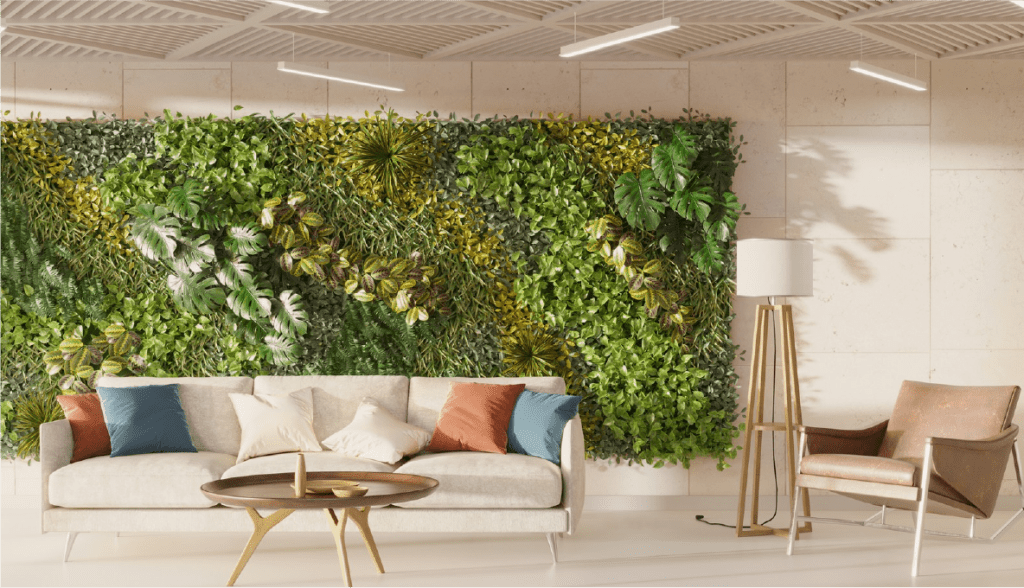
The connection between humans and nature is undeniable, and incorporating this relationship into our living spaces has emerged as one of the most significant design movements of 2025. Biophilic design – the practice of integrating natural elements into our built environment – is more than just a trend; it’s becoming a fundamental approach to creating spaces that promote wellbeing.
At its core, biophilic design seeks to satisfy our innate need to connect with nature, even when indoors. This can be achieved through direct experiences with natural elements like plants and water features, indirect references through materials and colors, and spatial configurations that mimic natural environments.
According to Martha Stewart Living, biophilic design is definitively “here to stay” in 2025, with an emphasis on natural materials, greenery, and creating spaces that evoke a sense of closeness to nature. This approach isn’t just aesthetically pleasing – studies have shown that biophilic spaces can reduce stress, improve cognitive function, and enhance creativity.
Implementing biophilic design in your home doesn’t necessarily require a complete renovation. Consider these approachable strategies:
- Maximize natural light through strategically placed windows or skylights
- Incorporate indoor plants of varying sizes and types
- Choose natural materials like wood, stone, and bamboo for furnishings and finishes
- Implement water features such as small fountains for both visual appeal and soothing sounds
- Select color palettes inspired by nature – earthy tones, blues, and greens
- Create views to outdoor spaces wherever possible
At Golden Branch Homes, we specialize in creating renovations that thoughtfully integrate biophilic principles. Our design team can help you transform your space into one that not only looks beautiful but also contributes positively to your physical and mental wellbeing through meaningful connections to nature.
Sources:
- Martha Stewart Living, “7 Home Renovation Trends That Are Out for 2025” (https://www.marthastewart.com/home-renovation-trends-out-2025-8761795)
- Decorilla Online Interior Design, “Interior Design Trends 2025” (https://www.decorilla.com/online-decorating/interior-design-trends-2025/)
- Studio McGee, “2025 Design Trends We’re Loving” (https://studio-mcgee.com/2025-design-trends/)
 Transforming Spaces,<br>Building Dreams.